Barnett Vortex Youth Compound Bow Adjustment Manual: A Comprehensive Guide
This manual provides detailed instructions for safely and effectively adjusting your Barnett Vortex Youth Compound Bow, ensuring optimal performance and a rewarding archery experience.
The Barnett Vortex Youth Compound Bow is specifically engineered as an excellent introductory bow for young archers, bridging the gap between recreational target practice and serious bowhunting. Its design prioritizes ease of use and adjustability, allowing it to grow with the developing archer.

Featuring an adjustable draw weight ranging from 19 to 29 pounds, the Vortex caters to a wide range of strength levels. This adaptability ensures a comfortable and confident shooting experience as the young archer gains skill and physical development. The compact size and lightweight construction further enhance maneuverability and control, making it ideal for smaller frames.
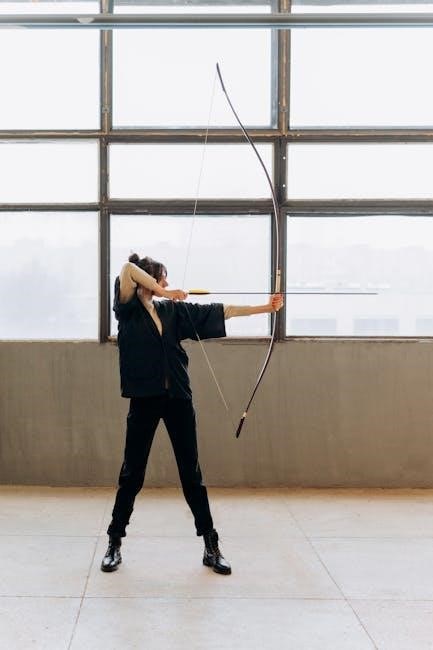
Approved by experienced youth hunters, like Eli McDaniels of Mossy Oak, the Vortex isn’t just a toy; it’s a genuine tool for learning the fundamentals of archery and fostering a lifelong passion for the sport. This manual will guide you through every adjustment process.
Understanding the Bow’s Key Features
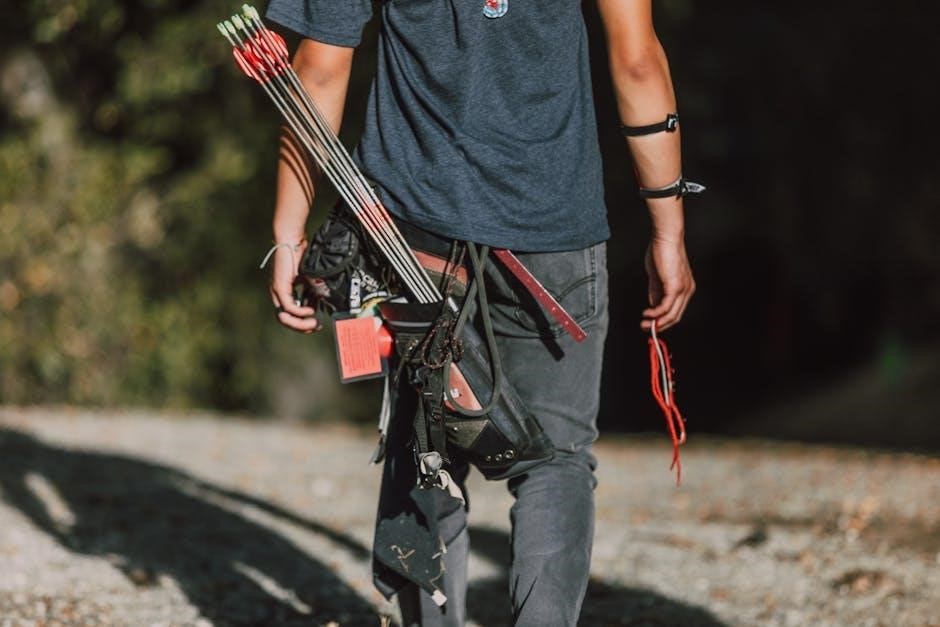
The Barnett Vortex Youth Bow boasts several key features designed for young archers. Its adjustable draw weight, spanning 19-29 lbs, is achieved through interchangeable draw weight modules, allowing customization as strength increases. Similarly, draw length is adjustable, ensuring proper form and accuracy.
The bow’s compact design and lightweight build contribute to improved handling and reduced fatigue during practice. Durable construction ensures longevity, even with frequent use. The cams play a crucial role in energy transfer and require understanding for optimal tuning.
The string and cables are vital components, demanding regular inspection and maintenance. Limb pockets, while generally pre-set, can influence performance. Familiarizing yourself with these features – draw weight, draw length, cams, string, and limbs – is essential before attempting any adjustments.
Safety Precautions Before Adjustment
Prioritize safety before undertaking any adjustments to your Barnett Vortex Youth Bow. Always ensure the bow is unstrung or that tension is completely released from the string and cables before working on modules or cams. Never dry-fire the bow – releasing the string without an arrow can cause severe damage and potential injury.
Wear appropriate eye protection during all adjustment procedures. A bow square is essential for accurate cam synchronization. Keep fingers and hands clear of the string path during adjustments. If unsure about any step, consult the full manual or seek guidance from a qualified archery technician.
Work in a well-lit, uncluttered space. Understand that improper adjustments can affect bow performance and safety. Regularly inspect all components for wear or damage before and after adjustments.
Draw Weight Adjustment
The Barnett Vortex Youth Bow features adjustable draw weight, accommodating growing archers. This bow allows for a draw weight range of 19-29 pounds, crucial for building strength and confidence. Adjusting the draw weight involves changing the draw weight modules located on the cams. Always ensure the bow is unstrung before making these adjustments.
Lower draw weights are ideal for beginners, while higher weights suit more experienced shooters. Selecting the correct draw weight is vital for proper form and accuracy. Incorrect weight can lead to poor shooting habits and potential injury. Refer to the module markings to determine the corresponding draw weight setting.
Remember to adjust both cams equally to maintain proper synchronization and avoid cam lean.
Identifying Draw Weight Modules
Draw weight modules on the Barnett Vortex Youth Bow are small, interchangeable components located on each cam. These modules determine the bow’s peak draw weight. They are typically labeled with corresponding weight values, such as 19lbs, 23lbs, and 29lbs, allowing for easy identification. Locate these modules by examining the outer portion of each cam, where the string and cables attach.
Each cam has two module slots. The modules are secured using screws or pins. Carefully inspect the existing modules to note their current positions and weight settings before making any changes. It’s crucial to use the correct modules for each cam to ensure balanced and consistent performance.
Always refer to the bow’s specifications or the manufacturer’s documentation for accurate module identification and compatibility.
Adjusting Draw Weight: Step-by-Step
Before adjusting, ensure the bow is unstrung and no arrows are present. Loosen the screws or pins securing the draw weight modules on both cams. Remove the existing modules and install the desired modules, matching the weight to the archer’s strength and skill level. Ensure the modules are correctly seated in the cam slots.
Securely tighten the screws or pins, ensuring they are snug but not over-tightened. Repeat this process for both cams, verifying that both sides have the same weight modules installed. Double-check all connections before stringing the bow. A properly adjusted draw weight enhances accuracy and safety for young archers.

Always consult the manual for specific torque specifications.
Draw Length Adjustment
Begin by loosening the screws securing the draw length modules on the cams. Carefully remove the current modules and select the modules corresponding to the archer’s draw length. Install these modules into the cam pockets, ensuring they are fully seated and aligned correctly. Consistency between both cams is crucial for accurate shooting.
Retighten the screws, applying even pressure to avoid stripping the threads. Verify that both cams exhibit the same draw length setting. String the bow and check the draw length by measuring from the string to the back of the grip. Fine-tune adjustments as needed for a comfortable and accurate draw.
Regularly inspect module security.
Locating Draw Length Modules
Draw length modules on the Barnett Vortex Youth Bow are found on each cam, typically secured by screws. These modules dictate the distance the string travels during the draw cycle, directly impacting the archer’s draw length. Identifying these modules is the first step in adjusting the bow to fit the shooter.

Modules are often numerically labeled, corresponding to specific draw length increments. Refer to the bow’s documentation or the module markings to determine the correct setting for the archer. Inspect the cam pockets; the modules should be firmly seated within them. Ensure both cams have identical modules installed for balanced performance.
Carefully note the original module positions before any adjustments are made.

Adjusting Draw Length: A Detailed Process
Begin by loosening the screws securing the draw length modules on both cams – do not remove them completely. Select the appropriate modules based on the desired draw length, referencing the bow’s specifications. Carefully reposition the modules, ensuring they are fully seated within the cam pockets.
Tighten the module screws securely, but avoid over-tightening, which could damage the cam. Repeat this process on both cams, verifying that identical modules are installed on each side. After adjustment, gently draw the bow (without an arrow) to confirm the new draw length feels comfortable and correct.
Double-check module alignment and screw tightness before shooting. Minor adjustments may be needed for optimal comfort and accuracy.
Cam Adjustment
Cam adjustment on the Barnett Vortex is crucial for tuning draw length and ensuring proper synchronization. Incorrect cam timing can significantly impact accuracy and bow performance. Begin by understanding that the cams control the bow’s power stroke and arrow velocity.
Adjustments typically involve changing draw length modules on each cam, ensuring both cams are identically configured. Always loosen the module mounting screws before repositioning. Verify that the modules are fully seated and the screws are tightened to the manufacturer’s specified torque.
Improper cam adjustment can lead to string walking and reduced efficiency. Regular checks and precise adjustments are vital for maintaining optimal bow performance.
Understanding Cam Timing
Cam timing refers to the synchronized movement of both cams during the draw cycle. Proper timing ensures the bow delivers consistent energy transfer to the arrow, maximizing accuracy and efficiency. Incorrect timing results in inconsistent arrow flight and reduced performance.
The Barnett Vortex utilizes a cam system designed for smooth operation and adjustability. Synchronized cams mean both cams reach their full draw positions simultaneously. Visual inspection is key; the cam arms should appear aligned when the bow is at full draw.
Any discrepancy in cam timing indicates a need for adjustment. Maintaining correct timing is paramount for safe and accurate shooting, preventing potential equipment damage and ensuring a positive archery experience.
Synchronizing the Cams
Synchronizing the cams on your Barnett Vortex involves adjusting the cable slides to ensure both cams rotate in unison throughout the draw cycle. Begin by loosening the cable slide screws slightly, allowing for movement. Draw the bow (carefully and with safety in mind) to approximately half draw weight.
Observe the cams; if one is ahead of the other, adjust the corresponding cable slide. Move the slide incrementally towards the lagging cam. Repeat this process, drawing the bow and observing the cam alignment, until both cams rotate perfectly in sync. Tighten the cable slide screws securely once synchronization is achieved.
Precise synchronization is crucial for consistent arrow flight and optimal bow performance. Regular checks are recommended, especially after adjusting draw weight or length.
Tuning the Bow for Accuracy
Achieving optimal accuracy with your Barnett Vortex requires meticulous tuning. Begin with paper tuning, shooting arrows through paper at a close range (typically 6-10 feet). Analyze the resulting holes; tears indicate the need for adjustments. A tear to the left suggests a stiff spine or a need to adjust the rest to the right, and vice versa.
Bare shaft tuning is another valuable technique, involving shooting un-fletched arrows to identify spine issues. Observe the bare shaft’s impact point relative to fletched arrows; discrepancies indicate spine mismatches. Fine-tune your rest position and potentially consider different arrow spines to achieve consistent groupings.
Consistent form and proper arrow selection are also vital components of accurate shooting;
Paper Tuning Explained
Paper tuning is a fundamental method for diagnosing arrow flight issues with your Barnett Vortex. Secure a large sheet of paper (butcher paper works well) to a sturdy target. Shoot an arrow through the paper from a distance of 6-10 feet, observing the resulting hole.
A clean hole indicates good arrow flight. Vertical tears suggest improper nock height, while horizontal tears indicate a need to adjust your arrow rest. A tear pointing left means the arrow is flying to the right, requiring a rest adjustment to the left, and vice versa.
Make small adjustments after each shot, carefully analyzing the paper’s feedback. Repeat this process until you achieve a clean, bullet-hole-like tear, signifying optimal arrow flight and a well-tuned bow.
Bare Shaft Tuning Techniques
Bare shaft tuning refines accuracy beyond paper tuning, identifying inconsistencies in your Barnett Vortex’s setup. Shoot a bare shaft (no fletchings) alongside a fletched arrow at a close range – typically 20-30 yards. Observe where the bare shaft impacts relative to the fletched arrow.
If the bare shaft impacts to the left of the fletched arrow, it suggests a stiffer spine or a need to adjust your rest to the right. Conversely, a right impact indicates a weaker spine or a rest adjustment to the left. Small adjustments are key; move your rest incrementally.
This process reveals how your bow responds without the stabilizing influence of fletchings, leading to tighter groupings and improved overall accuracy with your Vortex.
String and Cable Maintenance
Consistent string and cable maintenance is crucial for the longevity and performance of your Barnett Vortex Youth Compound Bow. Regularly inspect the string and cables for wear, fraying, or damage – especially at the loops and serving areas. Look for any signs of separation or unraveling.
Waxing the string is essential to prevent drying and fraying. Apply a quality bowstring wax liberally, working it into the fibers. Avoid using petroleum-based products. Inspect the cables for any kinks or damage, and ensure they are properly aligned in the cam grooves.
Replace the string and cables as recommended by Barnett, or sooner if significant wear is detected. Proper maintenance ensures safe and accurate shooting with your Vortex.
Inspecting String and Cables
Thoroughly inspect your Barnett Vortex Youth Compound Bow’s string and cables before each use. Begin by visually examining the entire length of the string, paying close attention to the serving – the wrapped sections at the loops and center; Look for fraying, unraveling, or any signs of wear.
Next, carefully inspect the cables, checking for kinks, bends, or damage where they contact the cam grooves. Feel the string and cables for any rough spots or inconsistencies. Ensure the serving is intact and hasn’t shifted. Check for any broken strands.
Early detection of wear prevents potential string or cable failure, ensuring safe and accurate shooting. Regular inspection is a vital part of bow maintenance.
Waxing the String
Regularly waxing the string on your Barnett Vortex Youth Compound Bow is crucial for extending its lifespan and maintaining performance. Apply a quality bowstring wax liberally to the entire length of the string, focusing on the serving sections. Work the wax into the fibers using your fingers or a dedicated wax applicator.
Ensure complete coverage, as wax protects against moisture, abrasion, and UV damage. Wipe off any excess wax with a clean cloth. Waxing helps maintain string integrity, preventing fraying and extending its usability. Frequency depends on usage; more frequent shooting requires more frequent waxing.
Consistent waxing contributes to smoother shooting and reduces the risk of string failure, promoting safety and accuracy. Inspect the string after waxing to confirm even distribution.
Replacing the String and Cables
Replacing the string and cables on your Barnett Vortex Youth Compound Bow is a task best left to a qualified archery technician, especially if you lack experience. However, if undertaking it yourself, ensure you have the correct replacement components specifically designed for this bow model.
Carefully remove the old string and cables, noting their routing through the cams and limbs. Install the new string and cables, following the original routing precisely. Proper tension and alignment are critical for safe and accurate operation. Use a bow press to safely manage the tension during the process.
Double-check all connections and ensure the string and cables are securely seated. After replacement, verify cam timing and perform a thorough safety inspection before shooting.
Limb Adjustment Considerations
Adjusting the limb pockets on your Barnett Vortex Youth Compound Bow allows for fine-tuning of the bow’s performance, but should be approached with caution. Limb pocket adjustments primarily affect cam timing and tiller – the balance of stress between the upper and lower limbs.
Minor adjustments can optimize arrow flight and reduce vibration. However, significant changes can negatively impact accuracy and potentially damage the bow. Always make small, incremental adjustments, and carefully observe the effects on arrow grouping.
Ensure both limb pockets are adjusted equally to maintain proper tiller. If you are unsure about this process, consult a qualified archery technician to avoid compromising the bow’s integrity or your safety.
Understanding Limb Pocket Adjustment
Limb pocket adjustment on the Barnett Vortex Youth Compound Bow involves rotating the pockets where the limbs attach to the riser. This rotation alters the angle of the limbs relative to the string, influencing cam timing and tiller. Clockwise rotation typically increases draw weight, while counter-clockwise rotation decreases it, though this is subtle.
The limb pockets feature markings or notches to help track adjustments. It’s crucial to adjust both pockets equally to maintain a neutral tiller, preventing uneven stress on the limbs and ensuring straight arrow flight. Improper adjustment can lead to cam synchronization issues.

These adjustments are typically made with specialized tools to achieve precise control. Always refer to the bow’s specifications and proceed cautiously, as significant changes can affect performance.
Potential Issues and Troubleshooting

Common issues with the Barnett Vortex Youth Compound Bow include cam synchronization problems after adjustments, leading to reduced accuracy and increased vibration. Uneven tiller, resulting from unequal limb pocket adjustments, can cause erratic arrow flight. String and cable issues, like fraying or stretching, also frequently occur.
Troubleshooting often begins with verifying cam timing using a bow square. Ensure limb pockets are adjusted equally to achieve a neutral tiller. Inspect the string and cables for wear, replacing them if necessary. If draw weight or length feels incorrect, double-check module installations.
Persistent issues may require professional assistance from a qualified archery technician. Never attempt repairs beyond your skill level, as this could compromise bow safety.
Resources and Further Information
For comprehensive support, the official Barnett website ([https://barnettoutdoor.com/](https://barnettoutdoor.com/)) offers downloadable manuals, FAQs, and instructional videos specifically for the Vortex Youth Bow. Numerous online archery forums and communities provide valuable insights and troubleshooting advice from experienced archers.
YouTube channels dedicated to archery, such as those demonstrating compound bow adjustments, can be incredibly helpful for visual learners. Local archery shops often host workshops and offer personalized tuning services. Mossy Oak, who reviewed the bow, may have additional resources.
Remember to prioritize safety and consult a qualified technician for complex adjustments or repairs. Always refer to the official Barnett documentation for the most accurate and up-to-date information.
Barnett Customer Support Contact
For direct assistance with your Barnett Vortex Youth Compound Bow, contact Barnett Customer Support. You can reach them via phone at 610-376-6000 during their business hours, Monday through Friday. Alternatively, email support is available through the contact form on their official website: [https://barnettoutdoor.com/customer-service](https://barnettoutdoor.com/customer-service).
When contacting support, have your bow’s model number and date of purchase readily available. Clearly describe the issue you are experiencing and any steps you’ve already taken to troubleshoot it. Detailed information will help them provide a faster and more accurate resolution. Barnett aims to provide excellent customer service and support for all their products.
Where to Find Replacement Parts
Genuine Barnett replacement parts for your Vortex Youth Compound Bow are readily available through several channels. The official Barnett Outdoor Products website ([https://barnettoutdoor.com/parts](https://barnettoutdoor.com/parts)) offers a comprehensive catalog of parts, searchable by model number. Authorized Barnett dealers also stock common replacement components like strings, cables, and modules.
Additionally, online retailers specializing in archery equipment, such as Lancaster Archery Supply and Amazon, carry a wide selection of Barnett parts. Always ensure you are purchasing genuine Barnett parts to maintain the bow’s performance and warranty; Using non-genuine parts may void your warranty and compromise safety.